

Emiliano Teran-Mantovani*
The recurring questions about who will control the oil industry and revenues, or how Venezuela will benefit, must be contrasted with the clear evidence of how the looting of the country is being reorganized under different structures and modalities. And how an imperial/oligarchic-national pact is dismantling the historic Republic to reshape the country and facilitates a massive appropriation of cheap natural resources, territories, rents and surpluses, and eventually, cheap labor as well. What to do?
I. Main features of the New Trump–Rodríguez Oil Agreement: Reserves Handed Over, NABEP and the Department of War
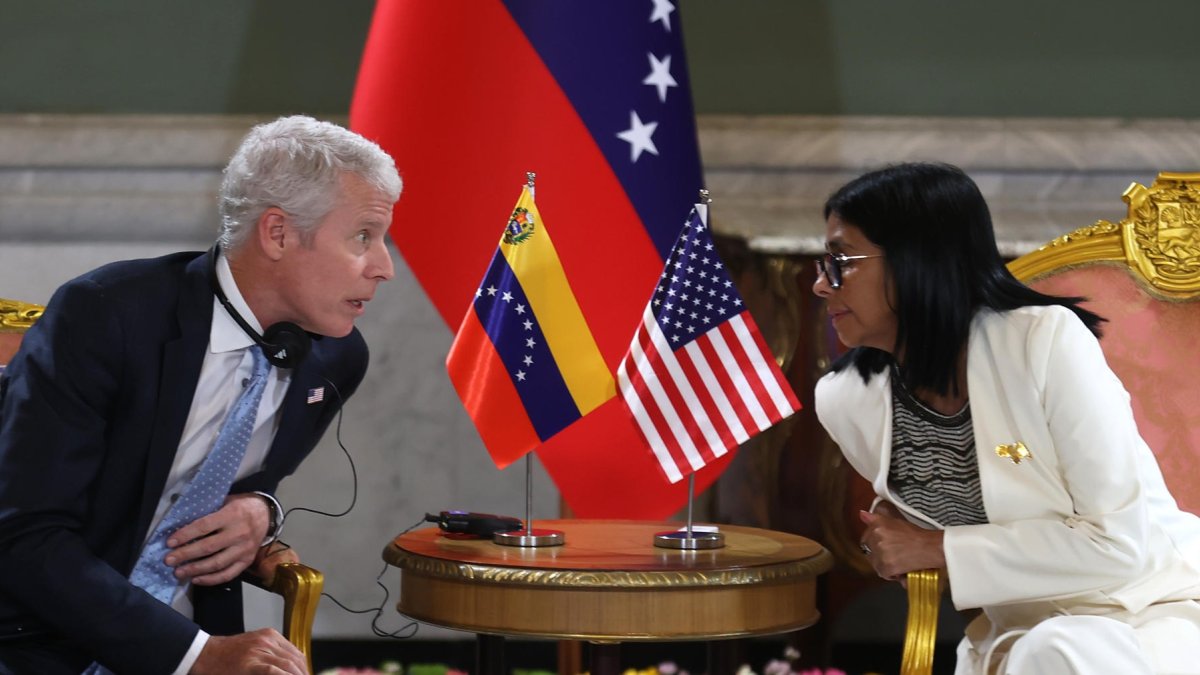
On August 28, a massive Oil Agreement between the government of Donald Trump and Delcy Rodríguez’s interim government was announced, described by the U.S. president as the “largest in history.” Trump stated that the United States was taking control of a significant portion of Venezuela’s oil reserves “at no cost to the American taxpayer,” and that U.S. reserves would be doubled and more[1].
Such announcements contrast sharply with the absence of detailed information, beyond a few Fact Sheets, speeches, and social-media posts. But this gap and arbitrariness have already become the norm in Venezuela over the past ten years: both in the way the country was governed under Maduro and, currently, under U.S. tutelage following the military intervention of January 3. Curious authoritarian continuities.
It is also curious because these opaque arrangements are based specifically on the exploitation of approximately 65 billion barrels of proven oil reserves[2], equivalent to one-fifth of the country’s reserves. There is no precedent for an agreement of this kind in the century-long history of Venezuela’s oil industry.
The White House Fact Sheet of August 31[3] refers to 100-year concessions for 17 oil fields, although Delcy Rodríguez referred to a 25-year term for the agreement between the two countries. These 17 fields are among the best and are located in the country’s most producing regions: several projects in Lake Maracaibo, others in northern Zulia state, and others in the Orinoco Oil Belt[4] (OOB). Although most have existing production and installed capacity, a few are projects that have yet to be developed.
And there is much more: beyond merely being an agreement between governments, what we have is a binational framework of energy guidelines that will be executed and operationalized by a Venezuelan company that was not only virtually unknown until this agreement—having been founded in 2024—but whose founders and current CEO, Alejandro Betancourt, have been involved in corruption schemes that have had an enormous impact on Venezuela. The company is North American Blue Energy Partners (NABEP)[5], headquartered in Barbados, which would suddenly become the second-largest private company in the world in terms of reserves. Betancourt was president of Derwick Associates, notorious for its involvement in one of the largest corruption cases linked to Venezuela’s electricity crisis[6], which contributed to leave the national system in ruins, with the humanitarian, social and economic consequences that are well known.
Alejandro Betancourt has faced investigations in Venezuela as well as in the United States, Spain and Switzerland over alleged corruption and money-laundering offenses; and he was arrested twice in the United Kingdom in 2025 pursuant to extradition requests from Spain and Switzerland[7]. Thus, once again, we must emphasize the continuities of corruption and authoritarianism under the Delcy–Trump tutelary interim government. We came from years of opacity in the management of Venezuela’s oil industry under the Maduro regime, when brokers, unknown private oil operators, and shell companies proliferated—also as a mechanism for circumventing international sanctions. In this context, Betancourt was already operating alongside Harry Sargeant III, obtaining contracts for various activities in Venezuela’s oil industry, until the founding of NABEP and the signing of agreements between it and PDVSA and CVP in 2024. When the White House Fact Sheet refers to NABEP as a “proven private operator with a track record”, it is referring to how the company expanded its total production to 200,000 barrels per day (Lake Maracaibo and OOB)[8], becoming Venezuela’s second-largest private producer after Chevron. In these continuities, Alex Saab left but Alejandro Betancourt reappears.
It is highly emblematic and representative of this new/old formula of looting and impunity that an entity such as NABEP should be the one to execute such an extractive agreement. On the Venezuelan side, it perpetuates an oligarchic model of concealment, arbitrariness and crony capitalism that can intensify extractivism and allow the ruling power structure to persist over time. NABEP thus functions as a hinge between transnational chains of massive wealth appropriation at Venezuela’s expense.
In the side of the United States, it should be noted that its government can veto the appointment of members of NABEP’s board of directors; the majority of these members must be U.S. citizens; while agreements and disputes are governed by U.S. law and are subject to the jurisdiction of U.S. courts. Furthermore, NABEP transfers 35% of its stake in its parent company to the Officeof Strategic Capital of the U.S. Department of War. This is highly significant, as it reveals the military logic underlying access to resources, expressed in the so-called “Donroe Doctrine”, where agreements are negotiated while cannon fire is aimed; our resources are incorporated into the Strategic Petroleum Reserve classification, viewed as a national-security matter that must be guaranteed by the military sector; and Venezuelan crude oil increasingly fuels the highly active U.S. global war machine.
Additionally, NABEP grants the U.S. State Department the right to purchase 20% of the production from all current and future fields operated by NABEP. The key feature: this 20% is guaranteed, and it can be purchased at cost. For the remaining 80% of production, the State Department has a “Right of First Refusal” to purchase it on a priority basis, which, according to the United States, guarantees a source of energy in the Western Hemisphere in emergency situations.
Finally, the Fact Sheet openly and explicitly states that the agreement expels the United States’ international adversaries from the hemisphere, directly referring to China—which operated approximately five fields included in the agreement[9]—as well as Russia and Cuba.
Thus, in practical terms, NABEP is clearly an instrument of territorial and national recolonization, and of the geopolitical competition.
II. A Neocolonial Pact and the Reshaping of Venezuela
How can such a dreadful binational energy agreement establish, thereby violating the current Constitution and trampling not only on the tradition of oil nationalism built up over decades, but even on the 215-year history of the Venezuelan Republic? How can such an outrageous arrangement actually be taking shape?
A substantial part of the answers lies in our recent history. First, the Maduro government handled the economic crisis —which had already begun to take root during the Chávez administration— in a disastrous manner. We already know the result: the collapse of an entire country, intensified by international sanctions. At the same time, Maduro’s determination to remain in power at all costs meant not only installing a new type of dictatorship in the country, but also dismantling democracy, institutions, regular channels of political mediation, the legal economy, and political and economic alternatives in order to achieve that objective. All of this left a country extremely vulnerable and fragmented in the face of the 2026 U.S. military intervention.
Second, this imperialist intervention, which represents a watershed in Venezuela’s contemporary history, has been abolishing the country’s sovereignty—or, rather, whatever remained of it. The Trump government is the one issuing the orders; and the Rodríguez government functions more as a national administrator, the most ideal and compliant one the United States could have today, while also guaranteeing territorial governability—unlike what María Corina Machado might be able to offer.
From Washington have come orders for the profound reform of the Organic Hydrocarbons Law, the new Mining Law, the new agreements to restore the national electricity system, the announcement of a restructuring process for external public debt, post-earthquakes reconstruction, and the decision as to when elections and democracy will take place. Washington also controls the country’s oil revenues and dictates how and when they are spent. It’s that simple.
The new Oil Agreement is the product of the convergence, or rather, the pact between this “brutalist” (to use Achille Mbembe’s term[10]) form of imperialism promoted by Trump, based on the Donroe Doctrine, and an authoritarian and corrupt regime that has chosen to mortgage the country for decades to come in order to retain its power and ensure its security. Thus, two forms of authoritarianism— each with its own functional mechanisms of power and wealth appropriation—are combined under a single framework of North American tutelage.
The new Oil Agreement is the result of this process of political decomposition that has been unfolding in Venezuela for years; and it is the crowning achievement of the capitulation and dismantling of oil nationalism, which had already begun under Maduro and is now being fully unleashed through U.S. intervention. The “Productive Participation Contracts” (CPPs) and the “Chevron Model” in the country had already begun years earlier, when Joe Biden was president of the United States. The CPPs grant private companies control over everything, which is unconstitutional. The integration of the CPPs into the oil business structure was key to the conception and subsequent drafting of this year’s reform of the Hydrocarbons Law. Within the framework of the CPPs and this reform, NABEP or other company can, in fact, carry out any operational activity throughout the value chain, exercise de facto control over territories, obtain recalculations of royalties and taxes, and manage revenues even through bank accounts outside the country. To put it in the technical terms provided by the amended law: to undertake the “comprehensive management”[11] of the business.
It is these precedents and the evidence we are witnessing that can help answer the recurring questions: Who will control the oil industry and its revenues? Or how will Venezuela benefit? A purely normative or legal interpretation of this one-sided agreement is not even sufficient when what is prevailing in the course of events is the exercise of arbitrary power through neocolonial subordination—in its purest, most naked form—linked to domestic authoritarianism. Nor are analyses based on partisan political expectations sufficient—a segment of the population, for example, had expectations of democracy and “progress” under Trump, which have evidently been deflating. Even less useful are interpretations based on superficial political promises of “growth” and “economic recovery”. Consider that, if those promised US$200 billion in royalties and taxes over 25 years (approximately US$8 billion annually) were ever realized, they might represent barely one-fifth of average annual oil-fiscal revenues during the 2005–2009 period. And we don’t even know how or on what they will be spent (for example, we may be forced to pay off the restructured foreign debt under who knows what conditions), or which groups will benefit.
Questions such as these must instead be contrasted with the clear evidence of how the country’s looting is being reorganized, under different structures and modalities. Of how an imperial/oligarchic-national pact is dismantling the historic Republic in order to reshape the country, where a new neo-colonial state emerges to facilitate the massive appropriation of cheap natural resources, territories, rents and surpluses and, eventually, cheap labor as well. It may be useful to review similar cases, such as Iraq after the 2003 invasion and the reshaping of that country’s petro-state[12].
In this framework, democracy and rights have no place. The aforementioned U.S. Fact Sheet is clear: “Private-sector led growth in production, output, and investment in Venezuela is a key precondition to driving continued reform and democratic transition following the incredible success of Operation Absolute Resolve”. First and foremost, guarantee energy appropriation; everything else comes afterward. Despite the rhetoric of U.S. officials about a ‘transition to democracy’, Trump insisted on September 2 what he has said on various occasions: “Venezuela is not yet ready for elections.”[13] Democracy, the separation of powers, the independence of the state, and compliance with the Constitution have no place here because they are obstacles to the energy and economic objectives.
Ultimately, this means that Venezuelans themselves have no place. They hardly matter. Their decisions, expressed, for example, in the July 28, 2024 elections, do not matter. Neither do their social and labor rights. And the environment is even less relevant, an area that has been rendered completely invisible in this conflict. It is impossible to imagine what environmental governance under the Oil Agreement will look like; what spills and accidents will mean amid the agony of the rule of law and the frightening track record of U.S. corporations around the world. Much less is there any thought given to the fact that those 11 billion barrels of oil will be burned in 25 years with such impunity, while the climate crisis worsens, and Venezuela (like the rest of Latin America) is only weeks away from facing the so-called “Super Niño,” an unprecedented one.
In short, the emergence of this mega Oil Agreement finally confirms the situation for those who had doubts. It links the geopolitical ambitions outlined in the November 2025 National Security document and the “Pax Silica” initiative, with the announcement in the August 31, 2026 Fact Sheet stating that “This agreement guarantees our energy dominance for the next century”. The agreement is also a product of this new and extraordinarily conflictive geopolitical context surrounding strategic resources, supply chains, and spheres of influence; and it is determined by highly regressive political forces that seek to dismantle democracy as a political model, while the global civilizational crisis continues to intensify.
Looking back at Trump’s famous meeting with the major oil companies to discuss Venezuela on January 9 of this year, it becomes clearer what the strategy was to allay their concerns and guarantee “long-term investments”: to entrench and secure the mortgaging of an entire country for decades to come. Only in this way could that guarantee of stable, reliable, and cheap energy eventually become a reality in times of “emergencies” and geopolitical confrontation.
III. What to do? From a Sovereign and Popular Perspective
 Recognizing the enormous challenges before us, and as a contribution to a collective discussion, I outline seven aspects for addressing our current situation:
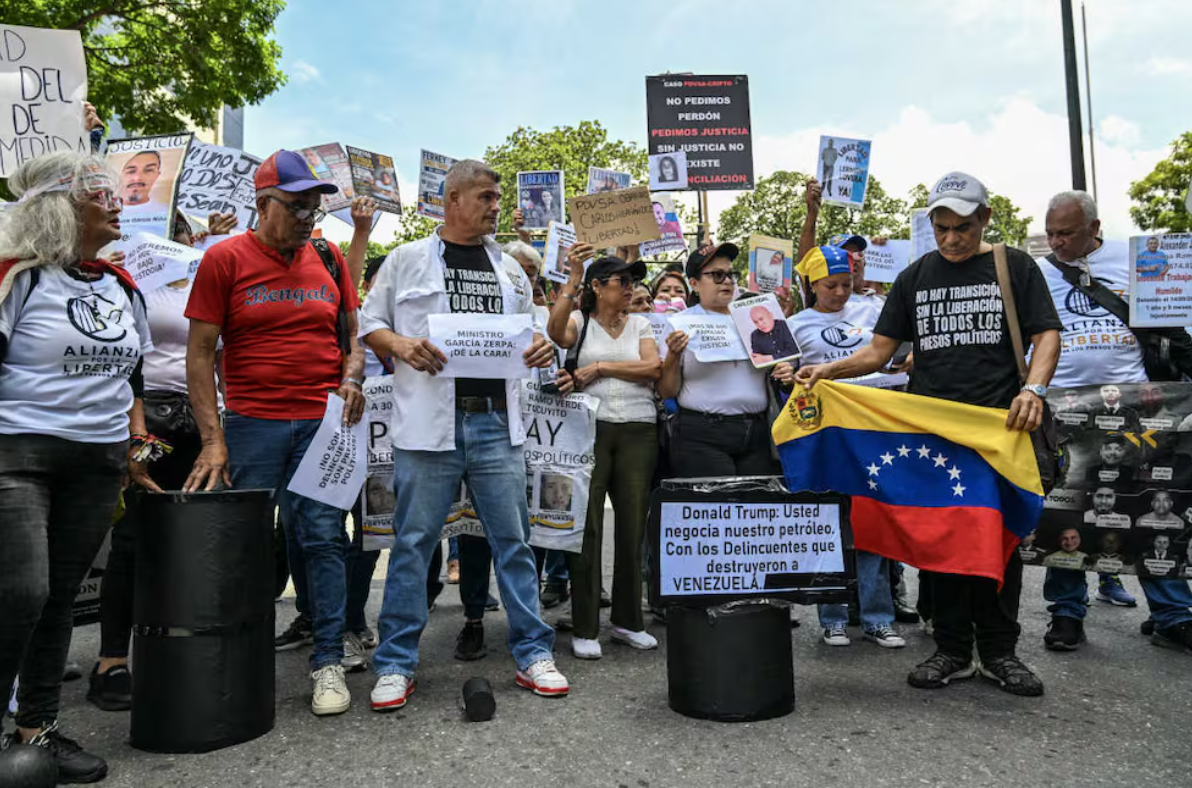
- The oil agreement has generated a very broad and diverse range of critical voices that have responded with indignation and rejection. Economists and scholars from different political tendencies, former ministers from governments preceding Chávez, critical sectors of Chavismo, some groups of the opposition and María Corina Machado, left-wing groups and trade-unions, social and human-rights organizations, among others. It is crucial to find spaces where these voices can come together, seeking to form a national front that, through statements, campaigns and actions, opposes this agreement in the name of respect for the Constitution. It is acknowledged that these actors differ among themselves, and that not all reject the agreement for the same reasons, but the severity of the situation demands a broad, diverse, and massive response.
- The agreement is sustained basically by the imperial force and power of the United States, combined with the authoritarian regime that still prevails in Venezuela. But it is built on shaky ground because of its unconstitutional nature, the fact that decisions are being made under an illegitimate government, its numerous irregularities and lack of transparency, the fact that it is being carried out by a company whose executives face serious allegations of corruption, and because it significantly harms the country’s interests. Moreover, several Democratic senators and some former U.S. officials have also raised questions about the agreement, while many of the major oil companies have expressed doubts about it and about Betancourt’s bizarre involvement.[14] There is also the question of what will happen to the Trump administration if an electoral debacle occurs in November’s midterm elections.
- Based on these premises, actions emphasizing the illegitimacy and illegality of the agreement are decisive. Such actions could serve as the basis for political and legal proceedings that might succeed if more favorable conditions and circumstances were to emerge in the country (such as the reactivation of democracy and concrete capacities for political and civic accountability). It must be said that this is not necessarily something that can happen in the short term.
- Insist on the return to an electoral path as soon as possible, which could also help create better conditions for popular mobilization and for realizing the demands for democracy and rights held by Venezuelan society. It is crucial that the new National Electoral Council be based on consensus and recognized by the country in order to ensure that the elections are valid.
- Such demands will not be possible without social mobilization and pressure from society. It is acknowledged that the population’s material conditions are extremely precarious and that mechanisms of state censorship remain in place. But, by contrast, there is enormous social unrest and deep weariness with the predominant political-party actors, which translates into a strong desire for change and, above all, for the recovery of minimum living conditions.[15] In addition, the widespread expressions of solidarity that emerged during and after the earthquakes reveal an enormously positive popular spirit that requires support for its organization and coordination.
- From a medium- and long-term perspective, Venezuela needs to build an alternative political opposition, beyond the current leaderships, including María Corina Machado. Although Machado is still the leader with the greatest support today and unites a significant portion of the population, her economic program does not differ from the current Chavista government’s subservient approach, nor does her political subordination to the Trump administration. Those of us who do not follow this approach recognize the urgent need to build this alternative opposition that defends historic popular demands—such as support for the most disadvantaged classes, public health and education, sovereignty over the national economy, social inclusion and participation, among others—, as well as environmental demands, emphasizing the serious ecological problems afflicting us and the urgency of addressing the climate crisis.
- There is also a cultural dispute that must be addressed. This involves reinforcing the ideals of democracy, which have been severely undermined under the Maduro regime and by U.S. intervention. We must propose alternative perspectives on the reconstruction of Venezuela that recognize the importance of the economy, but also emphasize that our country is much more than oil, GDP growth, and macroeconomic indicators. Venezuela is also its local and regional economies—which helped sustain much of the country when the national economy collapsed—; its territories and ecosystems, which sustain society; its social fabric, communities, and diverse cultural identities, which nourish not only collective memory but also Venezuelan identity; and ultimately, the dignity of the people that has shaped the country’s history, filled with struggles for justice and freedom. This can also foster other understandings of sovereignty, beyond viewing it solely through the centrality of the state, to understand it in terms of the will, participation action and autonomy of the population. “Recovering Venezuela” must be situated within a horizon in which the well-being and sustenance of life for the great majority can be expanded as central objectives.
*Emiliano Teran Mantovani is a sociologist and researcher at the Central University of Venezuela, with a PhD in Environmental Science and Technology from the Autonomous University of Barcelona. He is a founding member of the Venezuelan Observatory of Political Ecology.
NOTES
[1] https://truthsocial.com/@realDonaldTrump/posts/117175567133618952
[2] It should be emphasized that this figure is calculated using a 20% recovery factor, which, at least in Venezuela, has not actually been achieved. This means that this level of reserves is, at the very least, subject of controversy. Another question to be discussed is whether all of these reserves can actually be exploited.
[4] The fields include: Lagunillas Lago, Lagocinco, Sinovenezolana, Lagomar, Tía Juana Lago, Rosa Mediano, Lagomedio, Petrozamora, Petrocedeño, Junín Sur, Boyacá 8 and 5, Junín 1, 3 and 11, and Ayacucho 6 and 7. More information: https://www.bloomberglinea.com/latinoamerica/venezuela/acuerdo-entre-eeuu-y-venezuela-desplaza-a-operadores-sancionados-por-washington-de-17-yacimientos/
[6] See documentation concerning the case at: https://armando.info/este-sargento-de-florida-es-el-plan-b-de-maduro-con-bolichico-incluido/; and https://transparenciave.org/wp-content/uploads/2025/10/El-bolichico-Alejandro-Betancourt-Lopez-pagara-cuentas-a-la-justicia.pdf
[10] Mbembe, a Cameroonian historian, published his book Brutalism in 2020, in which he analyzes new trends in a global system that deploys uninhibited and limitless violence, quantifies and digitizes the webs of life, and turns humanity into matter and energy. https://www.planetadelibros.com.ec/libro-brutalismo/347266
[11] See my previous article: A Comprehensive Analysis of the Reform of Venezuela’s Hydrocarbons Law: Trends, Implications, and Consequences. https://ecopoliticavenezuela.org/a-comprehensive-analysis-of-the-reform-of-venezuelas-hydrocarbons-law-trends-implications-and-consequences/
[12] See: Muttitt, Greg (2011), Fuel on the Fire: Oil and Politics in Occupied Iraq. London: Bodley Head. Also: Le Billon, Philippe (2015), “The Contested Politics of Iraq’s Oil Wealth,” in Isakhan, B., The Legacy of Iraq: From the 2003 War to the ‘Islamic State’. Edinburgh University Press.
[15] See the results of the latest Datincorp poll: https://diarioversionfinal.com/politica-dinero/datincorp-81-de-los-venezolanos-no-se-siente-representado-por-ningun-liderazgo-politico/